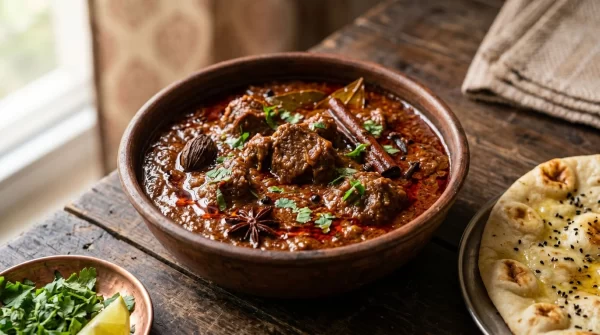
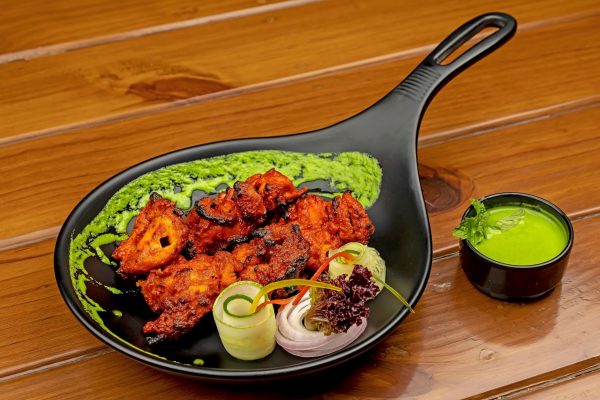
Ask ten people in Sydney what Indian food tastes like, and nine of them will describe butter chicken.
Which is fair. Butter chicken is delicious. But it has also become the default, the safe choice, the thing people order because it is familiar. And when you are planning an event where the food is supposed to be something guests actually remember, defaulting to the expected option is a bit of a missed opportunity.
South Indian food is different. Not just a little different either. It comes from a completely separate culinary tradition, uses different ingredients, different techniques, and produces a totally different experience on the plate. Lighter, brighter, and in many ways far more practical for a large, mixed guest list than the rich North Indian menu most Sydney caterers lean on.
We have been cooking for Sydney events since 1998 at Maya Caterers. In that time, we have seen what lands and what gets left on the plate. South Indian food, when it is done well, lands every single time.
Here is everything you need to know about it.
What Is South Indian Food?
Most people’s mental image of Indian food was shaped by North Indian restaurants. The tandoor, the naan, the creamy gravies, the paneer. That is one half of the story.
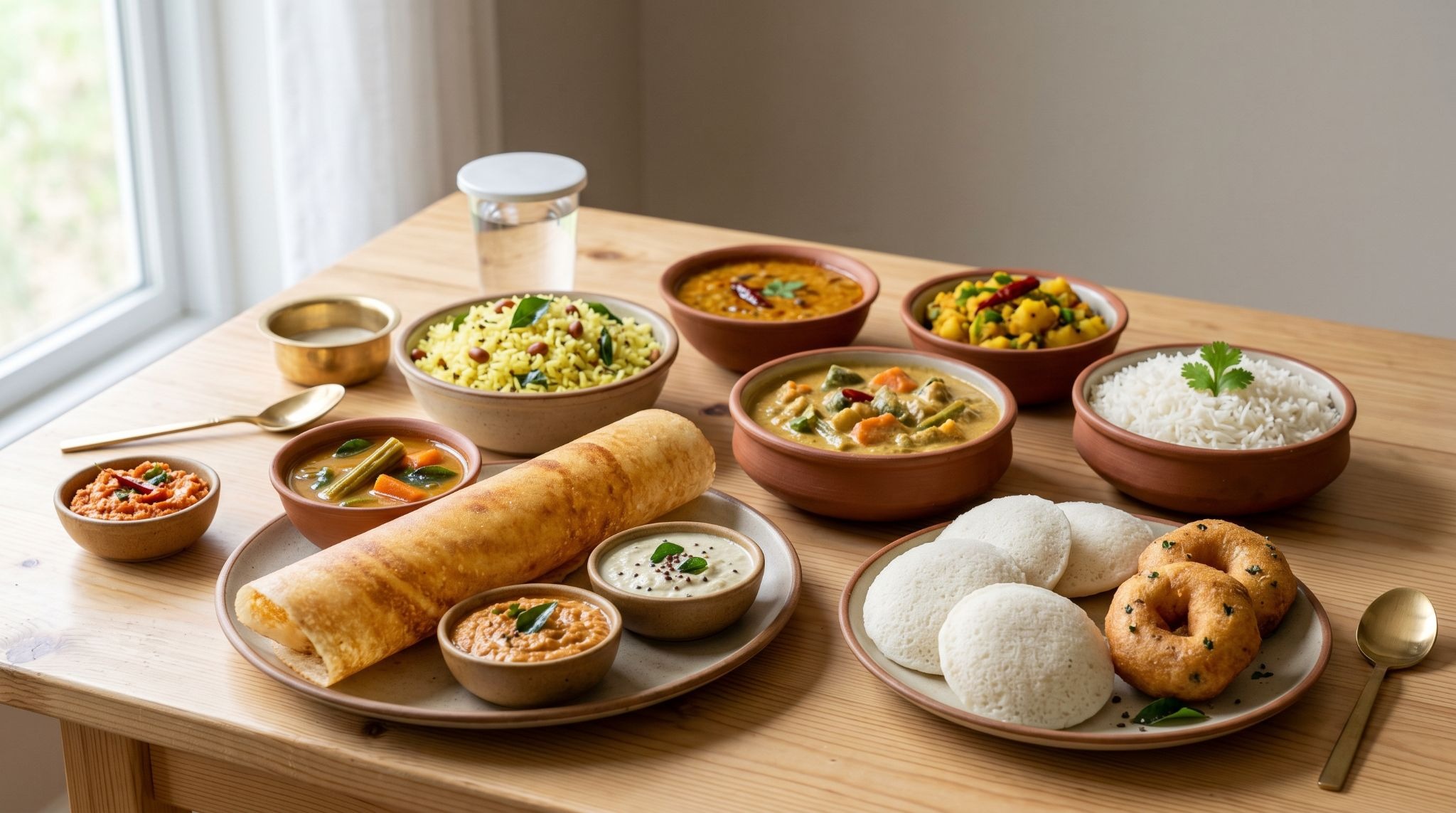
South India covers four main states, Kerala, Tamil Nadu, Karnataka, and Andhra Pradesh, and the food across all of them has almost nothing in common with what you find up north. Different grains, different fats, different spice logic, different everything.
Rice is the backbone, not wheat. Coconut is everywhere, in the cooking fat, in the sauces, and grated fresh on top of things. Tamarind is the souring agent that gives a lot of South Indian food its distinctive tang. And the tempering, whole mustard seeds, dried chillies, and curry leaves thrown into hot oil at the start of cooking, creates an aroma that is immediately, unmistakably South Indian.
The fermentation piece is interesting, too. Dosa and idli batters are left to ferment overnight. That process creates a subtle sourness and a lightness of texture that you cannot fake or rush. It is why a good dosa made from a properly fermented batter is completely different from a mediocre one.
Each state has its own personality within all of this. Kerala leans into coconut milk and coastal seafood. Tamil Nadu has some of the most complex spice blends in the country. Karnataka sits somewhere in the middle, a little of everything. Andhra Pradesh and the Chettinad region of Tamil Nadu are where you find the serious heat.
How It Sits Differently from North Indian Food
This comes up every time we are planning a menu with a client, so it is worth talking about plainly.
North Indian food is generous. That is the word for it. The gravies are built on onion, tomato, cream, and butter. The breads are made with wheat and cooked in a tandoor. Everything is rich and warm and substantial. In the right context, a cold Sydney evening, a winter wedding reception, a sit-down dinner, it is exactly what you want.
South Indian food is more like eating with the windows open. The sauces are thinner, but they carry more complexity. The sourness from tamarind, the fragrance of curry leaves, and the warmth of pepper rather than chilli heat. You eat it and feel satisfied but not heavy. The afternoon after a South Indian lunch, you can still function. That matters at events.
From a practical catering perspective, South Indian food also gives you far more to work with for guests who do not eat certain things. Vegetarian guests are not an afterthought here because most of the cuisine is already vegetarian. Vegan guests eat well because dairy barely features. Gluten-free guests have plenty of options because rice and lentils are the bases of most dishes. None of this requires adaptation or special requests. It is just how the food works.
The Dishes We Would Put on Your Menu
Dosa
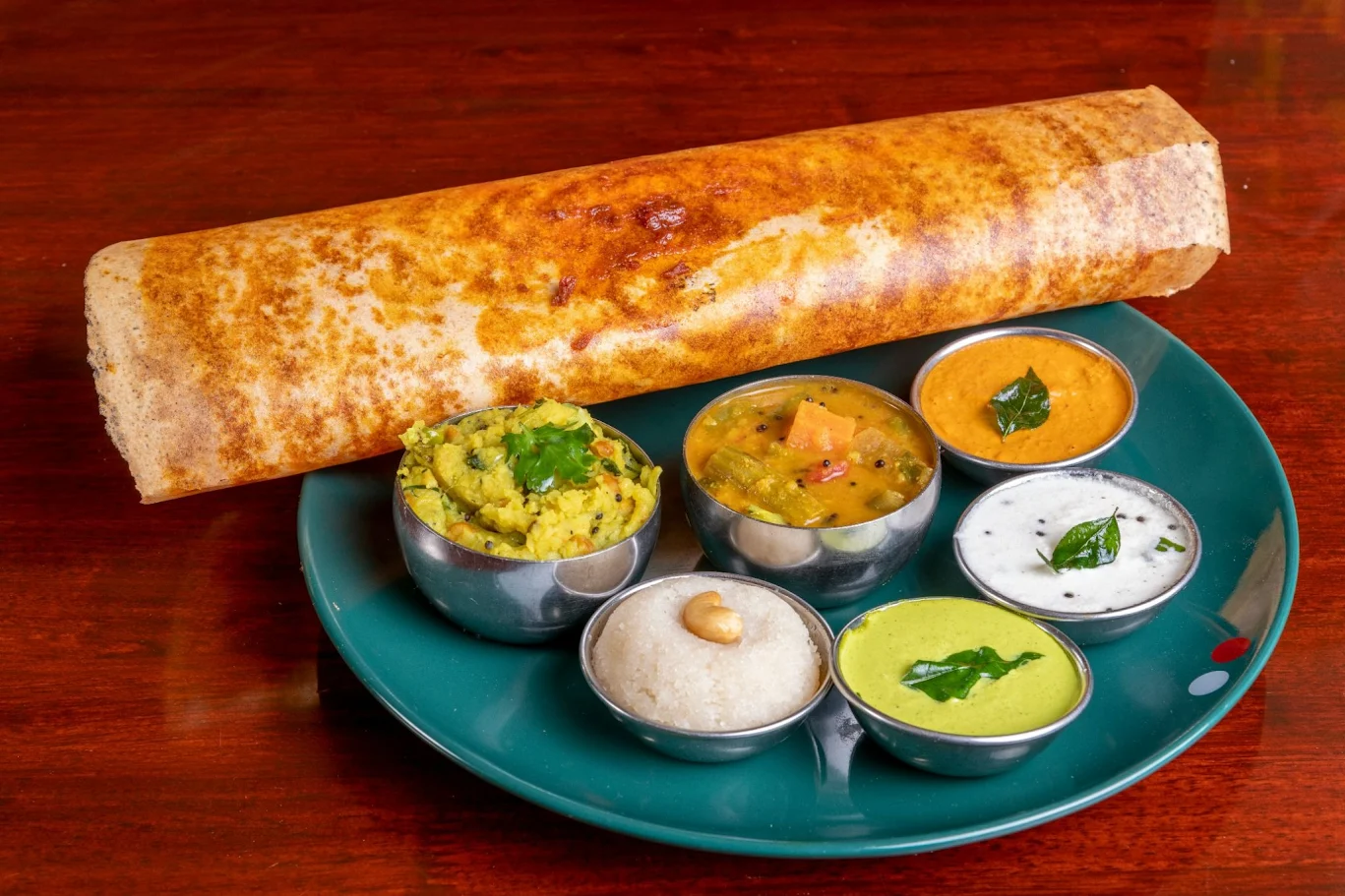
A dosa is essentially a very thin, very crispy fermented crepe made from rice and lentils. That description does not do it justice at all, but it is technically accurate.
What actually makes a dosa special is the texture. The edges are almost lacework-thin and deeply crisp. The surface has a slight chew. And when it is stuffed with spiced potato filling and folded into that familiar triangle, you have masala dosa, which is one of the most popular things we serve at any event where we have a live station running.
Guests who have never had one before always look a little uncertain when they see it coming. Then they take a bite with the coconut chutney and sambar, and the uncertainty disappears immediately. We have seen this happen hundreds of times. It never gets old.
Worth noting: Dosa batter has no gluten in it. For events with a significant number of guests avoiding wheat, a live dosa station solves a lot of problems at once.
Idli and Vada with Sambar
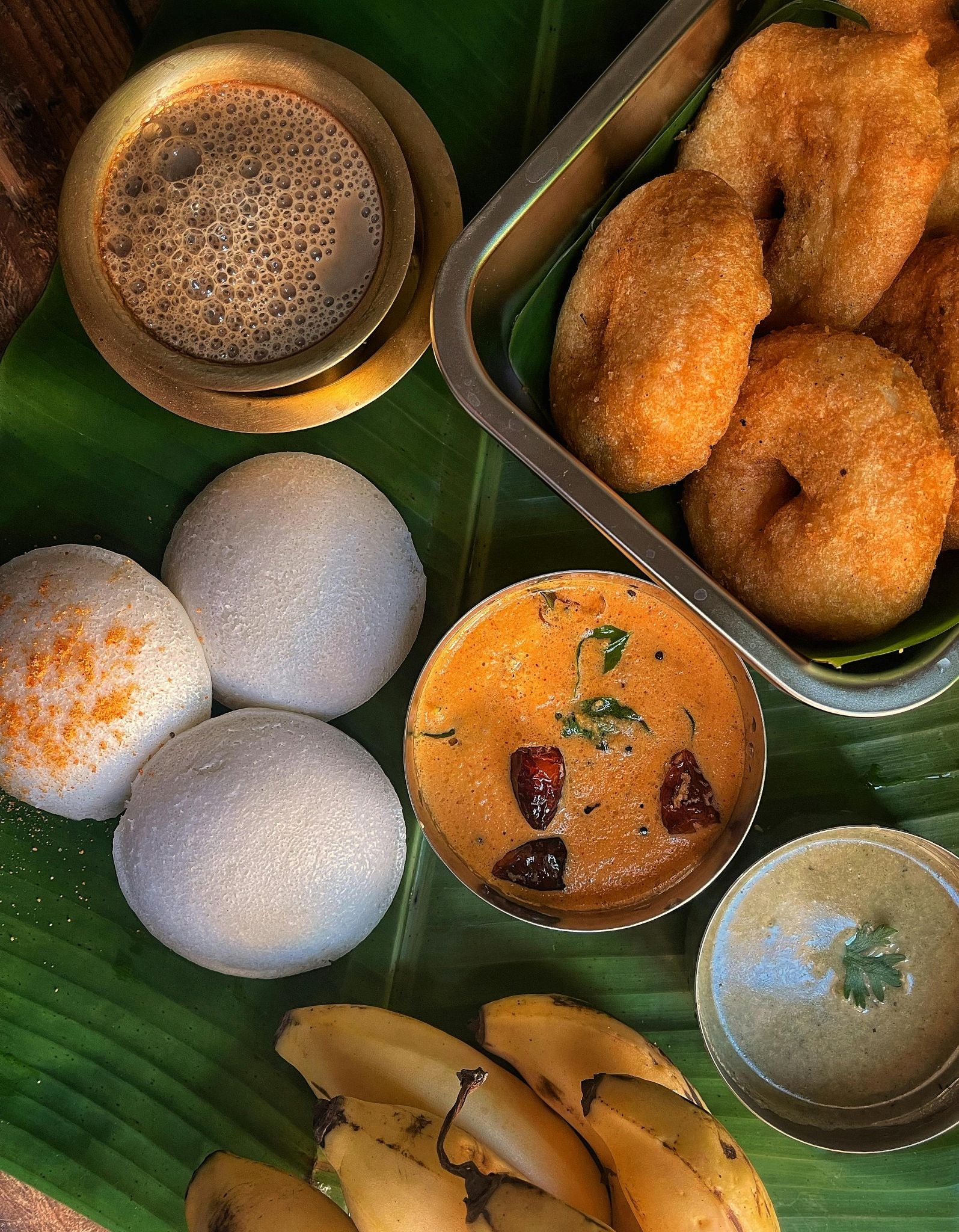
Soft steamed rice cakes and fried lentil fritters. That is idli and vada.
Idlis are mild, pillowy, and slightly tangy from the fermentation. On their own, they are nothing remarkable. But dipped into a good sambar, that thin, tamarind-soured lentil broth full of vegetables and a fresh spice tempering, they become something you keep eating past the point where you intended to stop.
Vada sits alongside them with a completely different energy. Crispy, a little spiced, satisfying in the way only fried food can be. The combination of the soft idli and the crunchy vada with sambar and coconut chutney is the kind of thing that feels comforting the very first time you eat it, even if it is completely new to you.
For morning events, afternoon functions, or any occasion where guests need something lighter, idlis and vadas are our first recommendation.
Kerala Fish Curry and Chicken Curry
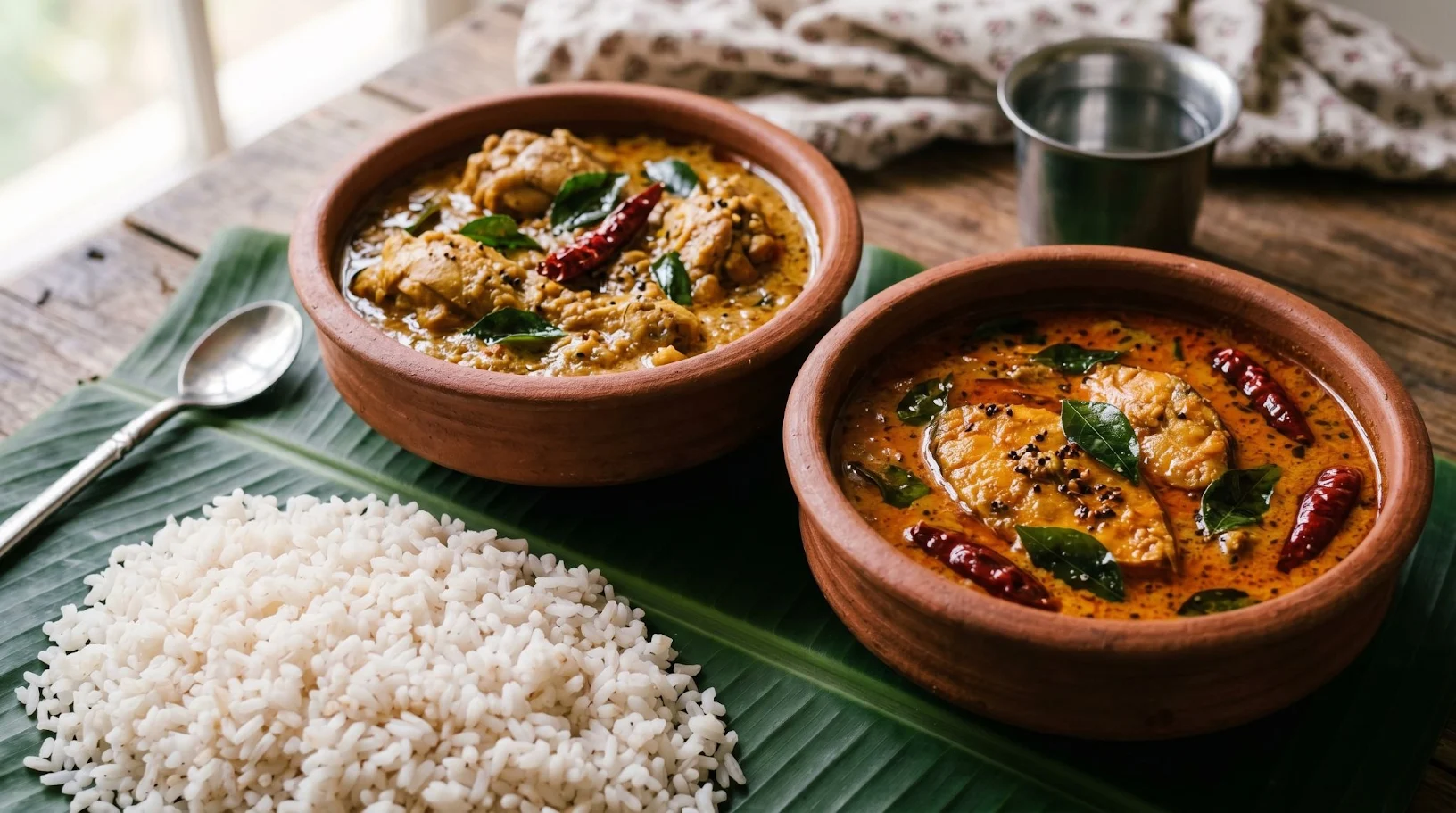
Kerala is a coastal state, and you can taste it in the food.
The fish curry there is made with coconut milk, tamarind, and a spice blend that includes mustard seeds, fenugreek, and dried red chillies. The coconut milk rounds everything out, giving you a sauce that is rich without being heavy, sour in a way that makes you want more. Served with steamed rice, it is one of those meals that quietly becomes a favourite.
The chicken curry follows the same logic. Slow-cooked, coconut-forward, with that characteristic Kerala warmth. Both dishes work well for guests who want something genuinely satisfying but are not looking for the heavy cream-based gravies they have had before at Indian events.
Chettinad Chicken
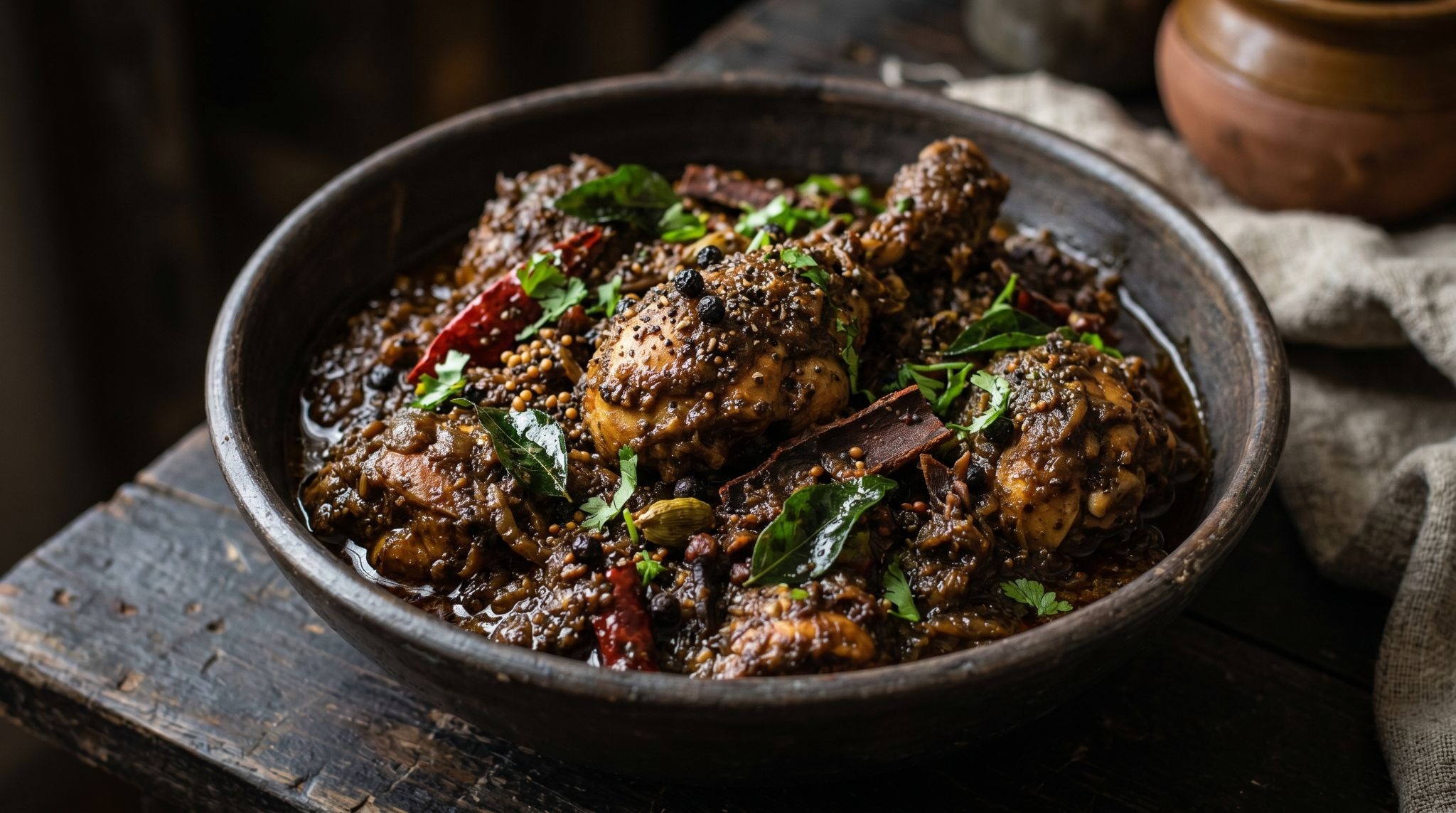
This one is not for everyone, and it does not try to be.
Chettinad cuisine comes from a specific community in Tamil Nadu and has a reputation that precedes it. The spice blends are complex and include ingredients you will not find in a standard Indian kitchen, such as stone flower, dried flower pods, and fresh cracked pepper used generously. The result is a dark, deeply aromatic curry that has a heat which builds slowly and lingers.
For guests who love bold food, who actively seek out the more interesting end of a menu, Chettinad chicken will be the dish they come back for. Put it on a menu alongside gentler options, and it will find its audience.
Vegetable Avial
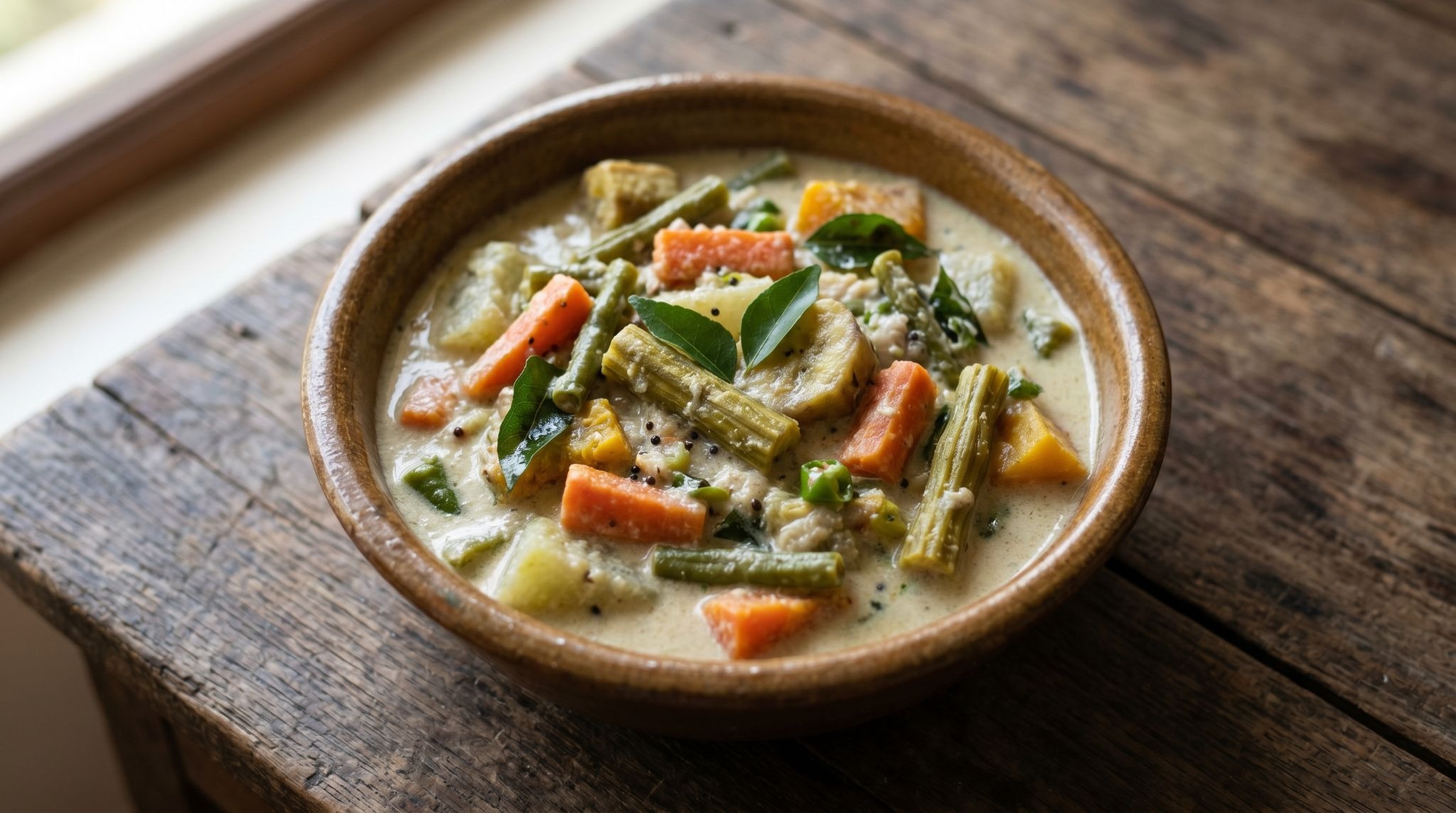
Avial is the dish that surprises people most consistently.
It is a Kerala preparation, mixed vegetables cooked in coconut and yoghurt with a finish of coconut oil and fresh curry leaves. It sounds simple, and it looks simple. The flavour is anything but. There is a tang from the yoghurt, a sweetness from the coconut, a fragrance from the curry leaves, and a warmth from the green chillies that runs underneath everything without dominating.
Avial is also naturally vegetarian, and depending on how it is prepared, vegan. At an event where you need vegetarian dishes that feel properly considered rather than tacked on, this is one of the first things we would suggest.
Hyderabadi Dum Biryani
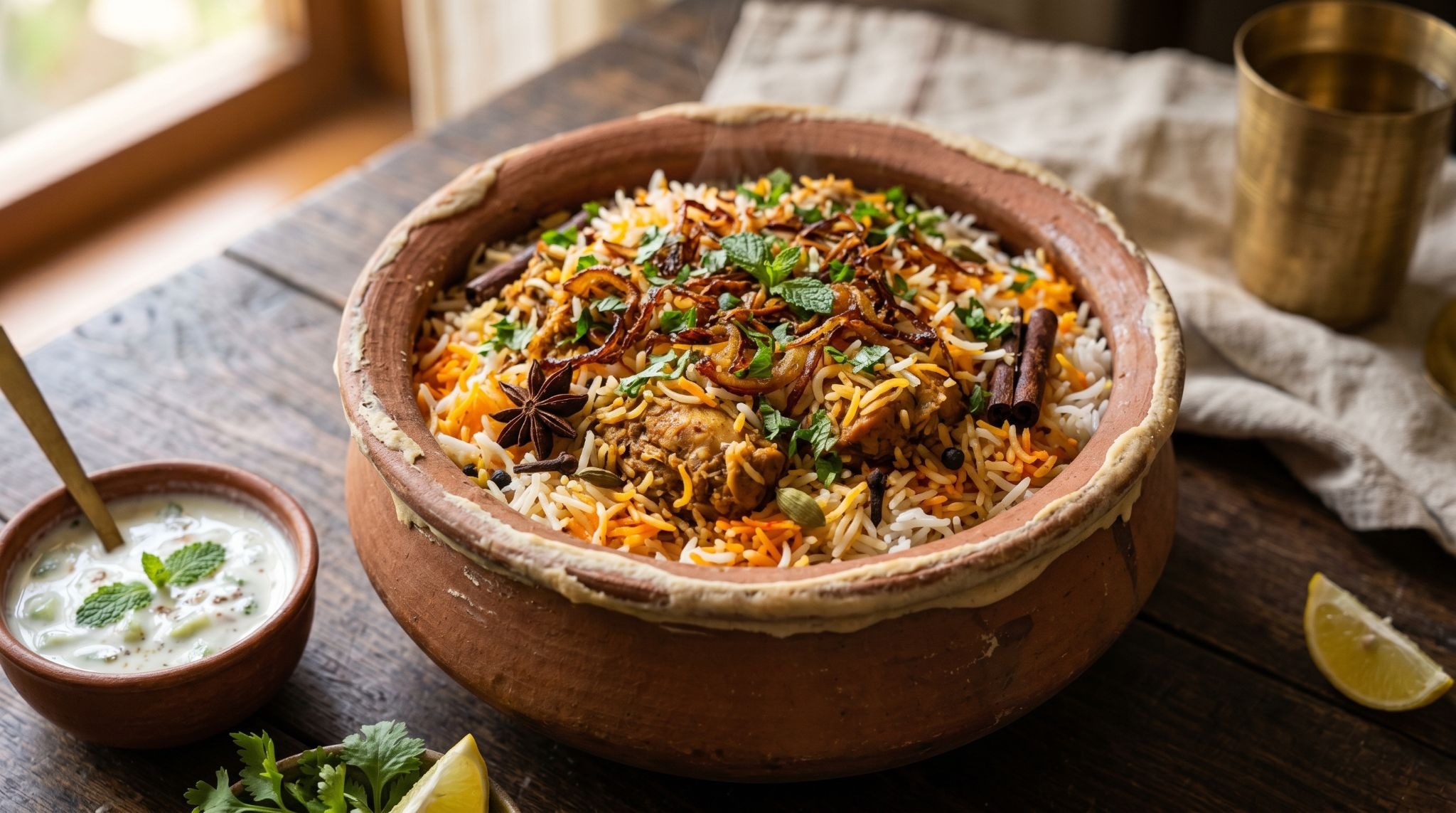
Hyderabad sits in Telangana, technically South India, and its biryani is in a category of its own.
The dum method is what makes it. Marinated meat and partially cooked rice are layered together in a sealed pot, then cooked slowly over a low flame so that everything finishes in the steam trapped inside. Saffron, rose water, fried onions, and long-grain basmati. When the seal is broken, the smell alone is enough to make people put down whatever they were doing and come over to see what is happening.
If you want one dish on your menu that people are definitely going to talk about, this is a strong candidate.
The Guests Who Will Thank You for This Menu
We deal with guest lists every week that include people who cannot eat gluten, people who do not eat meat, people who are vegan, people who are lactose intolerant, and people who just find heavy food difficult. A South Indian menu handles most of those requirements without anyone needing to ask a special favour or get something made separately.
More than the dietary angle, though, South Indian food works for events because it feels genuinely different. Sydney guests have been to a lot of Indian catered events. Many of them have very similar menus. A South Indian spread, done well, feels like a discovery rather than a repeat. That reaction, the one where someone tries something new and loves it, is what makes food memorable at an event.
When to Go South Indian
Weddings are the most obvious fit, particularly for families from Kerala, Tamil Nadu, Karnataka, or Andhra Pradesh, where this food is home food. But even for mixed-culture weddings with no South Indian connection, a South Indian menu is a genuine talking point and a way to give guests something they have not had at every other wedding they have attended.
Corporate events, particularly daytime ones, benefit from the lighter nature of South Indian cooking. Nobody wants to sit through an afternoon of meetings after a heavy lunch. A South Indian spread lets people eat well and stay sharp.
Cultural celebrations like Onam, Pongal, and Ugadi have specific dishes that are tied to the occasion itself. Getting those right matters, and it is something we take seriously when we are planning menus for those events.
A Note on How We Approach This
Maya Caterers has been North Indian at its heart since we opened. That is not going to change. But South Indian cooking has been part of what we do for a long time, and we cook it with the same care we bring to everything else.
The dosa batters are fermented properly. The tamarind is soaked and pulped fresh. The tempering is done to order. We are not offering a watered-down version of this food because it seemed like a good addition to a menu list.
If South Indian catering sounds like the right direction for your event, take a look at our catering services and our full menu, and then get in touch. We will have a proper conversation about what your event needs and put something together that actually reflects that.
Let’s Talk About Your Event
We are based in Surry Hills, and we cater events all across Sydney. Whatever you are planning, we are happy to talk it through.
Phone: (02) 8399 3785 Email: mayacaterers.au@gmail.com